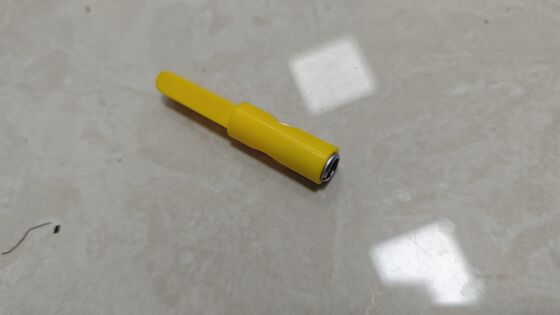
Eddy Current Welding Seam Probe Sensor
Introduction to Eddy Current Probe Sensors
Our sensor researchers have found that probe design and appropriate probe structure can enhance defect signals that were originally difficult to detect, making them easier to detect. After years of experience, we carefully design and strictly control the quality of details to provide various types of high-performance eddy current sensor detection probes, which can adapt to the use of various types of eddy current detection instruments. When selecting the ET series eddy current instrument and its matching probe, the best matching performance and highest detection sensitivity can be achieved. The sensor probes we provide include: differential, absolute, and reflection, drive pickup coils. Typically, the standard probe series can meet most of the customer's application needs, such as surface defect detection and evaluation, bolt hole inner wall crack detection, heat exchanger tube corrosion cracks and wear thinning, multi-layer structure corrosion and ferromagnetic weld crack detection.
|
Main parameters of point type eddy current probe
|
|
Item
|
Parameter
|
Parameter values
|
Mark
|
|
1
|
Probe frequency
|
10Hz-100KHz
|
Generally 15-65KHz
|
|
2
|
Probe size
|
1-10mm(Effective detection area)
|
Customized according to the workpiece
|
|
3
|
Lift off range
|
0.2mm-0.8mm
|
Based on the roughness and workpiece size tolerance
|
|
4
|
Testing standard
|
Length, width, and depth 5*0.2*0.5
|
Testing standards
|
Selection of probe sensors
When customers have special testing requirements or are not familiar with the specifications and function selection of probes, please provide the following information, and we will provide recommended choices: 1. The material and heat treatment of the inspected workpiece; 2. The physical dimensions, surface, and end conditions of the material of the inspected workpiece; 3. The manufacturer and model of the instruments used for testing; 4. Content and standards of testing items; 5. Detect speed or rhythm. The probe can be divided into two types based on the output signal of the detection coil: parametric and transformer. The general frequency is 10Hz-10MHz. According to the different testing materials, one can choose to have an excitation coil or not.
Types of probe sensors
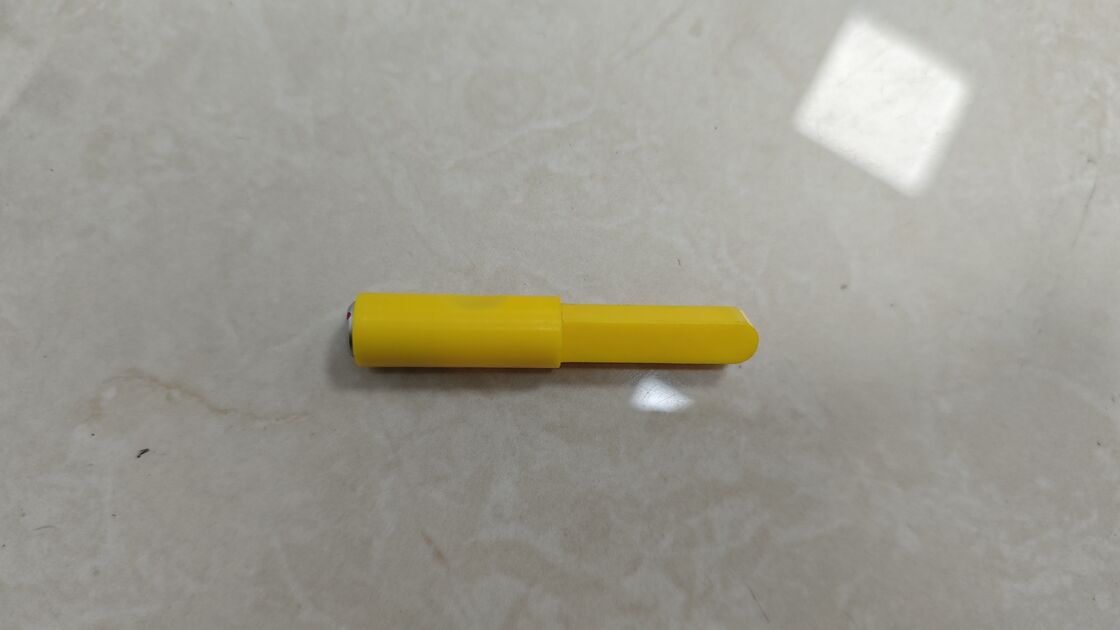
According to the testing requirements, various probes can be configured: point type, flat, curved/profiling probes, internal/external through type probes, rotating probes, hardness material sorting, conductivity, coating thickness measuring probes. Customized testing probes that are most suitable for customer product testing needs.
The use of probe sensors
A typical eddy current probe has a certain detection angle. According to the detection requirements, the probe angle is adjusted according to the relative movement direction between the workpiece and the probe. The detection surface of the probe is perpendicular to the surface of the tested workpiece (placement type, point probe). During the detection process, the probe and the workpiece maintain a relatively uniform speed and a relatively stable lifting distance. The best lifting distance is generally between 0.2-0.8mm. The gain range of the instrument needs to be adjusted according to the different lifting distances.
Adjustment process:
1. Place standard samples;
2. Set the direction of probe movement and install it vertically;
3. Adjust the lifting distance to 0.2-0.8mm (depending on the surface roughness and dimensional tolerance of the workpiece);
4. Run the software, adjust the frequency and gain until the standard defect alarms at the critical position. (If the probe is lifted too close, it will produce a signal saturation state, and if it is too far, it will produce poor sensitivity).
Use of probe wires
According to the different interfaces of the instrument, different structures are used to make probe wires. Generally, when making probe wires, it is necessary to know the instrument interface and interface definition, and make probe wires according to different definitions.



 Your message must be between 20-3,000 characters!
 English